Start with the exact note
Do not translate “hood system” into “order a cleaning” before reading the complete inspection note. Preserve every page and attachment, then ask the issuing authority what the cited item requires, what proof it expects, and how the follow-up or reinspection is handled.
A hood-area note can involve grease cleaning, the fire-suppression system, exhaust or mechanical equipment, electrical controls, physical access, an altered cookline, permits, or missing records. Those questions may sit close together in the kitchen, but one service does not prove the others are complete.
The City of Forney says fire-code violations are documented and require reinspection. That makes the exact wording, issuer, timing, and closeout instructions more useful than a summary such as “we failed the hood inspection.”
Capture the first-hour facts
Before calling a provider, make one working copy and record:
- The complete note, including its heading, page numbers, attachments, photographs, and any handwritten additions.
- The issuing office, inspector or contact when shown, inspection date, restaurant address, and exact hood or system identified.
- Every cited item or reference exactly as written. Do not paraphrase a code number from memory.
- The stated correction date, response date, reinspection instruction, or contact method.
- The last cleaning report, service label, invoice, condition photos, suppression record, repair record, and permit or plan material that may relate to the named item.
- The person responsible for coordinating the authority response, property access, approvals, and records.
If a page or attachment is missing, treat the note as incomplete. Ask the issuer for the complete record before trying to assign the work.
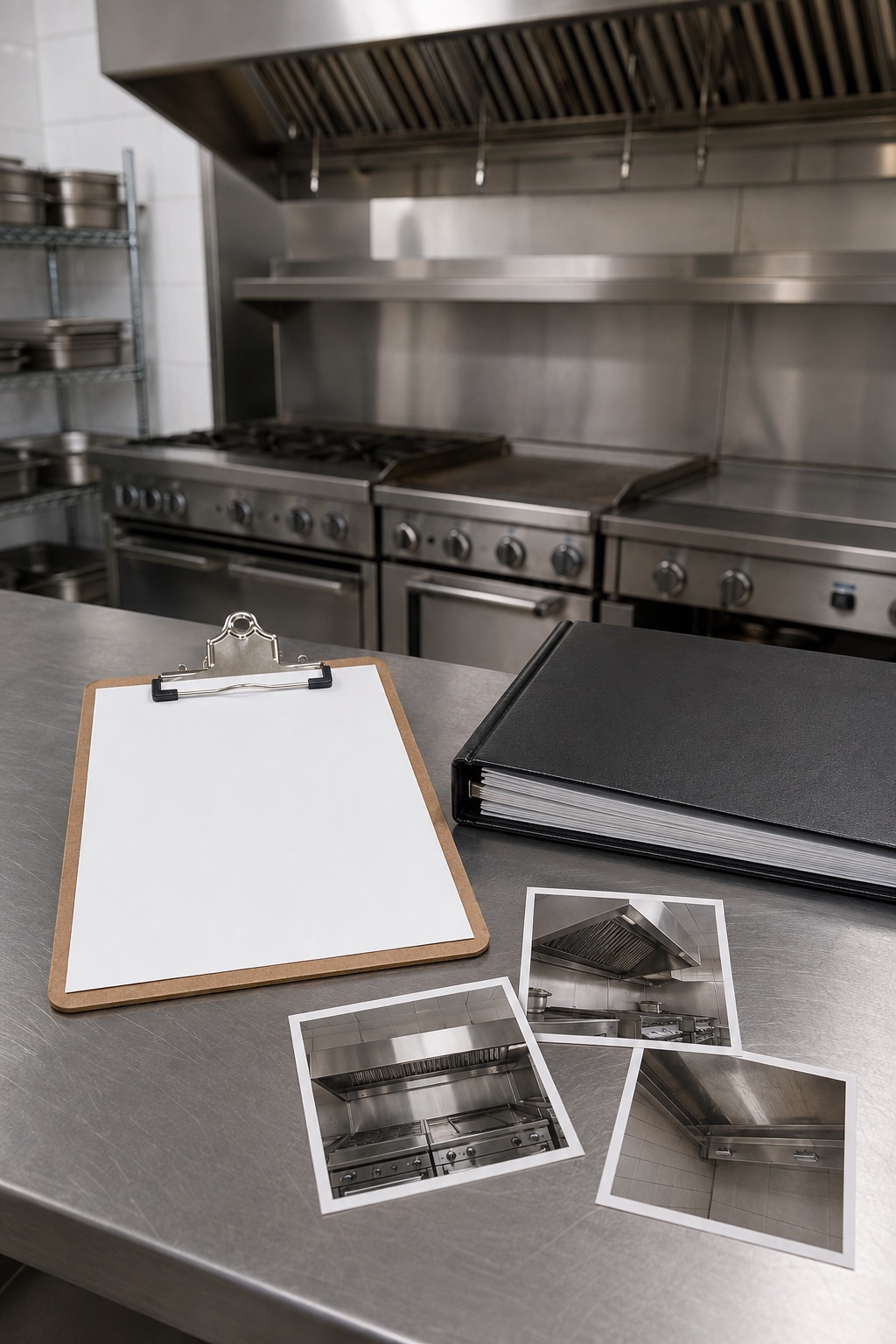
Route each line to the right conversation
Use the wording below only to organize questions. The issuing authority—not this guide or a cleaning provider—determines what a specific note means and what closes it.
| If the note names | Ask the issuer | Likely conversation | Proof to retain | Do not assume |
|---|---|---|---|---|
| Grease buildup, cleaning, or an unclean exhaust path | Which hood, duct, fan, or accessible area is identified, and what completion evidence is expected? | Commercial hood and exhaust cleaning for the named scope. | Dated report, location-specific photos, invoice or work order, service-label details, and any inaccessible-area note. | Cleaning includes suppression inspection, repair, access construction, or approval. |
| Nozzle, agent, cylinder, detection, actuation, pull station, tag, or protected appliance | Is the item part of the listed fire-suppression system, and what qualified work or record is required? | Fire-suppression inspection or service, separate from grease removal. | The record for the actual suppression work and any required follow-up. | A hood-cleaning report proves suppression-system service. |
| Fan operation, airflow, motor, switch, interlock, wiring, or controls | Which component and condition are identified, and is a permit or specific qualification involved? | Mechanical, electrical, controls, or equipment service as directed. | Diagnosis and completion record for the named component, plus required permit or inspection records. | Cleaning corrects an operating, electrical, or design condition. |
| Duct access, access panels, leakage, clearance, damage, or an unreachable area | Is the issue access for cleaning, a physical repair, a design condition, or a separate code question? | Cleaning-access review, mechanical or repair review, design professional, or authority as applicable. | Photos, measurements or plans when requested, work record, and the updated cleaning report. | Adding access, repairing ductwork, or interpreting clearance is included in routine cleaning. |
| Cookline change, hood coverage, plans, permit, listing, or installation | Which approval, plan, permit, or inspection path applies to the current arrangement? | Issuing authority, responsible design or permit party, and qualified system contractors. | Approved plan or permit record and the completion/inspection documents requested by the authority. | A cleaning appointment approves an altered cookline or installation. |
| Missing certificate, label, report, photograph, or service history | Which exact record is missing, who may provide it, and what alternative evidence—if any—is acceptable? | Original record holder, service provider, equipment owner, property contact, and issuing authority. | The recovered original or replacement evidence accepted for this item. | An invoice, sticker, or photo alone proves the complete scope. |
Use the cleaning-versus-suppression guide when the note uses broad language around both systems. It explains the service boundary without deciding what the inspector meant.
Build one closeout packet
Keep the original note at the front. Behind it, organize one line-item record for each issue rather than one pile of unrelated paperwork.
| Closeout item | Record | Completion check |
|---|---|---|
| Authority direction | Complete note plus the issuer's written clarification or contact record. | The exact item, expected proof, responsible party, and next authority step are identifiable. |
| Cleaning work | Dated report, photos, invoice or work order, label details, and exceptions. | The restaurant, hood or system, completed areas, and inaccessible or uncleaned areas are named. |
| Other system work | Separate suppression, mechanical, electrical, repair, design, or permit record. | The document identifies the actual work; it is not represented as a cleaning record. |
| Open item | Named owner, next action, target date, and dependency. | It remains open until the responsible party and authority process say otherwise. |
| Follow-up | Reinspection request, response, or other closeout record required by the issuer. | The authority—not the provider—determines whether the documented item is closed. |
NFPA’s official 2024-cycle development record describes written exhaust inspection and cleaning reports that identify work and areas that were inaccessible or not cleaned. That is useful record context, not a promise that any one report satisfies a Forney note. Use the report guide to check whether a cleaning document identifies the actual system and exceptions, then keep the final set inspection-ready.
Confirm the local instruction
Forney’s current Fire Inspections page explains the city’s inspection and reinspection process. Its Fire Marshal Division publishes inspection, permit, and code responsibilities, while the Fire Codes & Building Standards page lists the city’s current adoption context.
Those pages do not replace the actual note. Ask the issuing contact:
- What exact condition or missing record does this line identify?
- Which hood, exhaust, suppression, appliance, fan, access point, or document does it apply to?
- Which party or qualification is required for the correction?
- What evidence should be submitted or available?
- How and when is reinspection or other follow-up requested?
- What should happen if part of the work is inaccessible or reveals a separate issue?
Record the response with the note. Do not mark an item closed merely because work was scheduled, paid for, or photographed.
When the note points to cleaning
If the note or issuing authority identifies grease cleaning or exhaust-path cleanliness, prepare a focused call. Have the restaurant address, complete note, hood and fan count, cooking profile, last proven cleaning date, existing report and photos, named system areas, roof and duct-access details, property contact, deadline, and preferred work window ready.
Ask the cleaning conversation to identify the agreed hood-to-fan scope, access limits, protection and cleanup plan, documentation, and how newly found repair or non-cleaning concerns will be separated. The commercial hood-cleaning page owns that scope and phone next step.
The call can define cleaning work. It cannot interpret the inspection note, promise reinspection approval, or replace suppression, mechanical, electrical, design, repair, or permit work.