Do not inherit an undocumented cleaning date
Taking over a restaurant does not make the previous operator’s hood-cleaning history complete. Start with the last date you can actually support. If a sticker, report, invoice, and photos do not line up, mark the date or scope as unknown instead of filling the gap with an assumption.
Then separate three questions: what work can be documented, what changed in the kitchen or exhaust system, and what the lease or City of Forney process requires from the incoming operator. Hood cleaning can address an agreed cleaning scope. It does not interpret a lease, approve occupancy, inspect fire-suppression equipment, or certify an altered cookline.
Start with four record sources
One inherited item rarely tells the whole story. Compare the items together and note conflicts.
| Record source | What it can identify | What it does not prove alone | Next check |
|---|---|---|---|
| Hood service label | A service company or person, a date, and the hood associated with the label when those details are present. | That every duct, fan, access point, or containment area was reached and cleaned. | Match the label to the written report and the correct hood system. |
| Written report | The reported work, system areas, inaccessible or uncleaned areas, and open findings when documented. | That the current condition is unchanged or that separate suppression, mechanical, permit, or repair work is complete. | Check the service date, restaurant address, system identity, exceptions, and follow-up. |
| Invoice or work order | Who was billed, the stated service, date, amount, and approved line items. | That the stated scope was completed exactly as expected or that hidden areas were accessible. | Compare line items with the report, photos, and any change approvals. |
| Condition photos | Which hood, filters, duct access, fan, or grease area was photographed at a particular stage when the images are identifiable. | A complete system inspection, a cleaning date without context, or current code compliance. | Look for location, system, date, before/after grouping, and missing components. |
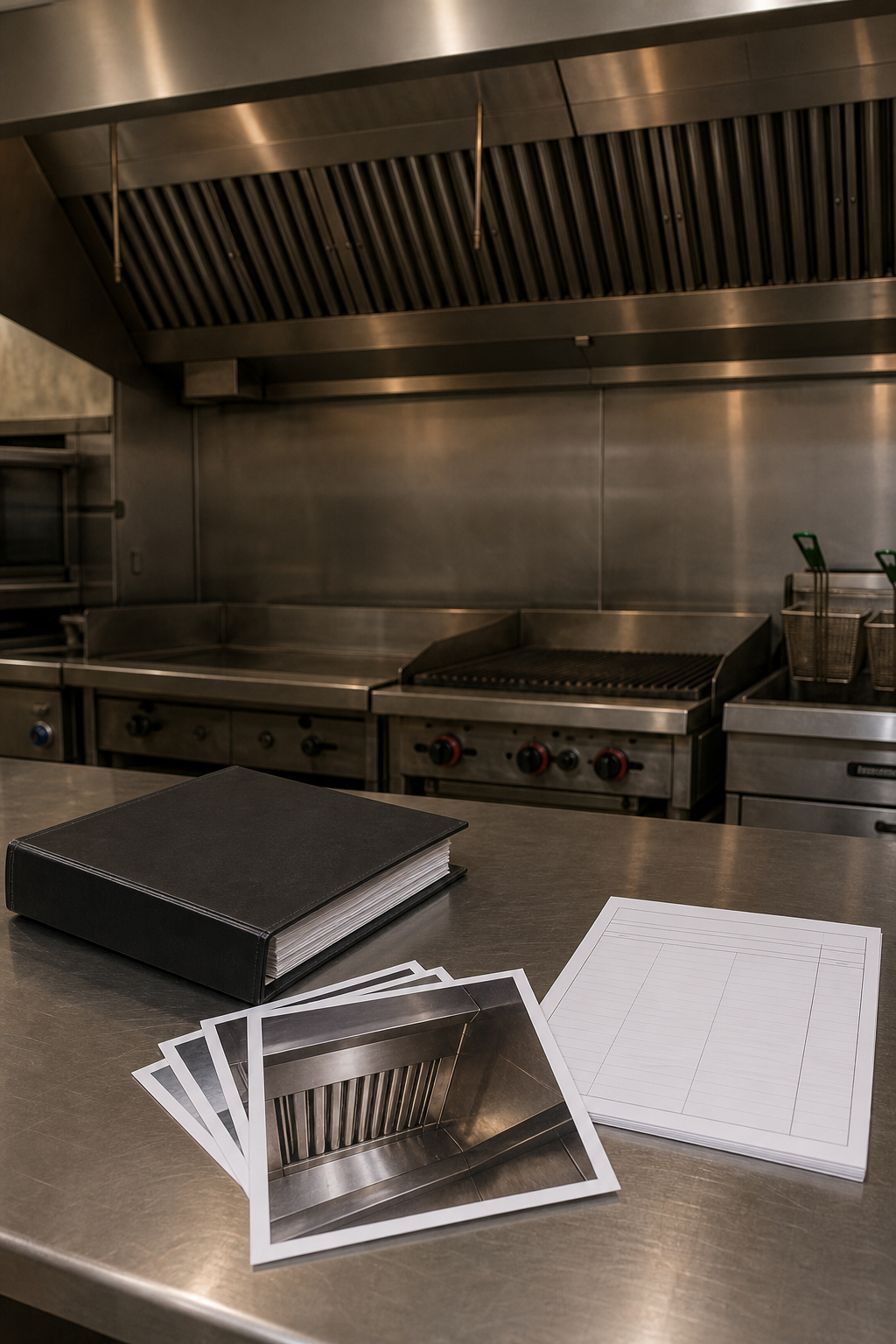
Use the service-sticker page to read the visible label without stretching its meaning. Use the written-report page to check whether the report identifies the actual system, work, access limits, and follow-up. Keep the final record set together with the hood-cleaning documentation checklist.
NFPA’s official public standards-development record for the 2024 cycle describes an on-premises certificate or hood label and a written report that identifies the work and areas that were inaccessible or not cleaned. That record is useful standards context, but it is not proof of the code edition adopted in Forney and does not turn one document into a complete condition assessment.
Separate the takeover into three decisions
1. What cleaning history can you prove?
Write down the last supported inspection or cleaning date, the hood or system it applies to, the company or person identified in the record, and any areas noted as inaccessible or not cleaned. Keep “unknown” as a valid answer. It creates a clearer call than an invented date.
2. What changed in the kitchen?
Compare the inherited records with the current cooking line and exhaust path. Note moved, added, removed, or replaced appliances; a different cooking volume or method; a changed hood, duct, fan, access panel, or grease-containment arrangement; and any new roof, gate, alarm, or property-access rule. Do not climb onto the roof or open protected equipment to complete this list.
3. Which question belongs outside cleaning?
Lease responsibility, occupancy approval, equipment design, permits, suppression-system work, mechanical performance, electrical concerns, and code interpretations belong with the responsible written agreement, authority, or qualified party. Keep those questions visible, but do not assume one hood-cleaning appointment answers them.
Use the change-to-question matrix
| Takeover finding | Question to resolve | Correct conversation | Detail for the cleaning call |
|---|---|---|---|
| New owner or tenant | Who holds responsibility for inspection, maintenance, cleanliness, access, and records under the actual written agreement? | Equipment owner, tenant, property manager, and lease or management contact. | Name the decision contact and any approval or access step. |
| Cookline or equipment changed | Does the existing hood, exhaust, suppression, or permit record still match the current arrangement? | City, responsible design or permit party, and the qualified system parties involved. | List what moved, was added, removed, or replaced. |
| Cleaning date or scope is missing | What can be verified from the label, report, invoice, and photos, and what needs current review? | Previous record holder and hood-cleaning conversation. | State the last proven date and the exact missing item. |
| Access was blocked or excluded | What prevented access, who controls it, and what must be arranged before the next visit? | Property/access contact and cleaning scope conversation. | Identify the roof, gate, hatch, duct panel, fan, alarm, or schedule constraint. |
| Inspection or occupancy note mentions the system | What does the note require, which authority issued it, and which part belongs to cleaning versus another system? | Issuing authority first, then the appropriate cleaning, suppression, mechanical, electrical, or permit party. | Read the note exactly and have a copy ready. |
NFPA’s official development record also places responsibility with the system or equipment owner unless it is transferred in writing to a tenant, management company, or another party. It notes that changes in ownership, tenants, or cookline arrangements are a reason to inspect an existing installation. Treat that as standards context—not a lease opinion or a promise about Forney’s adopted requirements—and confirm the actual written agreement and local direction.
Keep Forney’s city process separate
The City of Forney’s current Certificate of Occupancy page says its packet requests intended-space use, tenant information, water-service verification, emergency contact information, and a Fire Marshal inspection. The same page says a building permit is required for an alteration before applying for a Certificate of Occupancy.
Forney’s Fire Inspections page says inspectors review new construction and existing commercial buildings for fire hazards and code compliance, and that documented violations require correction and reinspection.
Those city steps should shape the takeover checklist, but they do not make this page a permit or inspection decision. Ask the city whether a specific equipment or cookline change is an alteration, what inspection applies, and what current documentation is required. Do not schedule cleaning as a substitute for that answer.
Prepare the hood-cleaning call
Have these details ready:
- Restaurant address and the incoming owner, tenant, or property contact.
- Hood, filter-bank, and rooftop-fan count from safe observations or existing records.
- Last cleaning date you can prove and the evidence supporting it.
- Service label, written report, invoice or work order, and condition photos available.
- Missing, conflicting, inaccessible, or uncleaned areas noted in the inherited record.
- Appliances or cookline arrangements that moved, were added, removed, or replaced.
- Roof, gate, hatch, alarm, key, landlord, or after-hours access requirements.
- Any City, Fire Marshal, property, insurer, or lease note, copied exactly rather than summarized from memory.
- Opening, inspection, construction, or turnover timing that may affect access and coordination.
Use the commercial hood-cleaning page for the cleaning scope and phone next step. If a new estimate follows, compare it line by line against the inherited record so a smaller scope is not mistaken for an equivalent one.
Build the handoff record for the next manager
After the takeover questions are resolved, keep one location-specific file with the current label, report, invoice, photos, access notes, open findings, responsible contacts, and next confirmed action. Name the hood or fan when the location has more than one system. Keep cleaning records distinct from occupancy, suppression, mechanical, electrical, and lease records so one document is never used as proof of unrelated work.
The goal is not to make the file thick. It is to make the next decision traceable: what was known, what changed, what was completed, what remained open, and who owns the next conversation.
For standards context, review NFPA’s current NFPA 96 publication page and the official 2024-cycle development record. For local direction, use the City of Forney pages above.